


Differential Pricing and the Business of Psychotherapy
An Ethical Path to Greater Income
It is said that no one becomes a psychotherapist for the money. And indeed, psychotherapists as a group earn far less than many others with similar levels of professional training and experience. As a psychiatrist who worked as a psychotherapist for over thirty years, I was keenly aware of how my income was a fraction of that of most of my medical colleagues. But being committed to a profession that offers more modest incomes doesn’t mean we are powerless to find ethical ways to expand those incomes.
Ours is a noble profession, and we rightly take pride in providing understanding and compassion to those we treat. But if we allow ourselves to be deluded into believing that somehow we are “above” being a business, we do ourselves a profound disservice. Practicing psychotherapy is indeed a business, and to deny this is to deny ourselves the opportunity to think like a business person and incorporate conveniences and efficiencies that enhance income and improve the service. One of those efficiencies is differential pricing.
What Is Differential Pricing?
Across virtually every service industry, fixed pricing has given way to pricing that responds to time, demand, and context. Airlines adjust fares by the minute. Baseball tickets cost more when the rival team is in town. Restaurants charge more for dinner than lunch for the same dish. This is called dynamic or differential pricing, and it is now the norm, not the exception.
Psychotherapists are actually closer to this model than most realize. If you charge more for after-hours crisis calls, or you agree to slide your fee to accommodate someone with greater financial need, you are already practicing differential pricing. Same thing if you contract with different insurance companies and accept 'allowed' amounts, which are vastly different from your full fee. So the question is simply whether to apply that same logic more deliberately for greater profit with clients who pay out of pocket.
Differential pricing for therapists is straightforward: you set fees by time slot, announced transparently in advance. That's it. No hidden charges, no surprise invoices, no discrimination based on patient characteristics. Just honest, upfront pricing that reflects when a service is delivered.
Some examples:
- Highly desired appointment on a Saturday or late in the evening might warrant a premium fee
- A hard-to-fill mid-morning weekday slot might be offered at a lower fee to attract bookings that might otherwise sit empty
- A prepaid package of sessions offered at a "bundled" rate
Professional associations allow clinicians autonomy to set their own fees. And provided that fees are based solely on the service duration and the time slot--not on the patient, their diagnosis, their insurance status, or any other personal characteristic--differential pricing is ethically permitted. Your fee for an hour of psychotherapy on Saturday morning doesn't have to be the same as your fee on Tuesday morning. Differential pricing, while not yet routinely practiced, makes it posible to deliver that same compassionate care AND improve your profit.
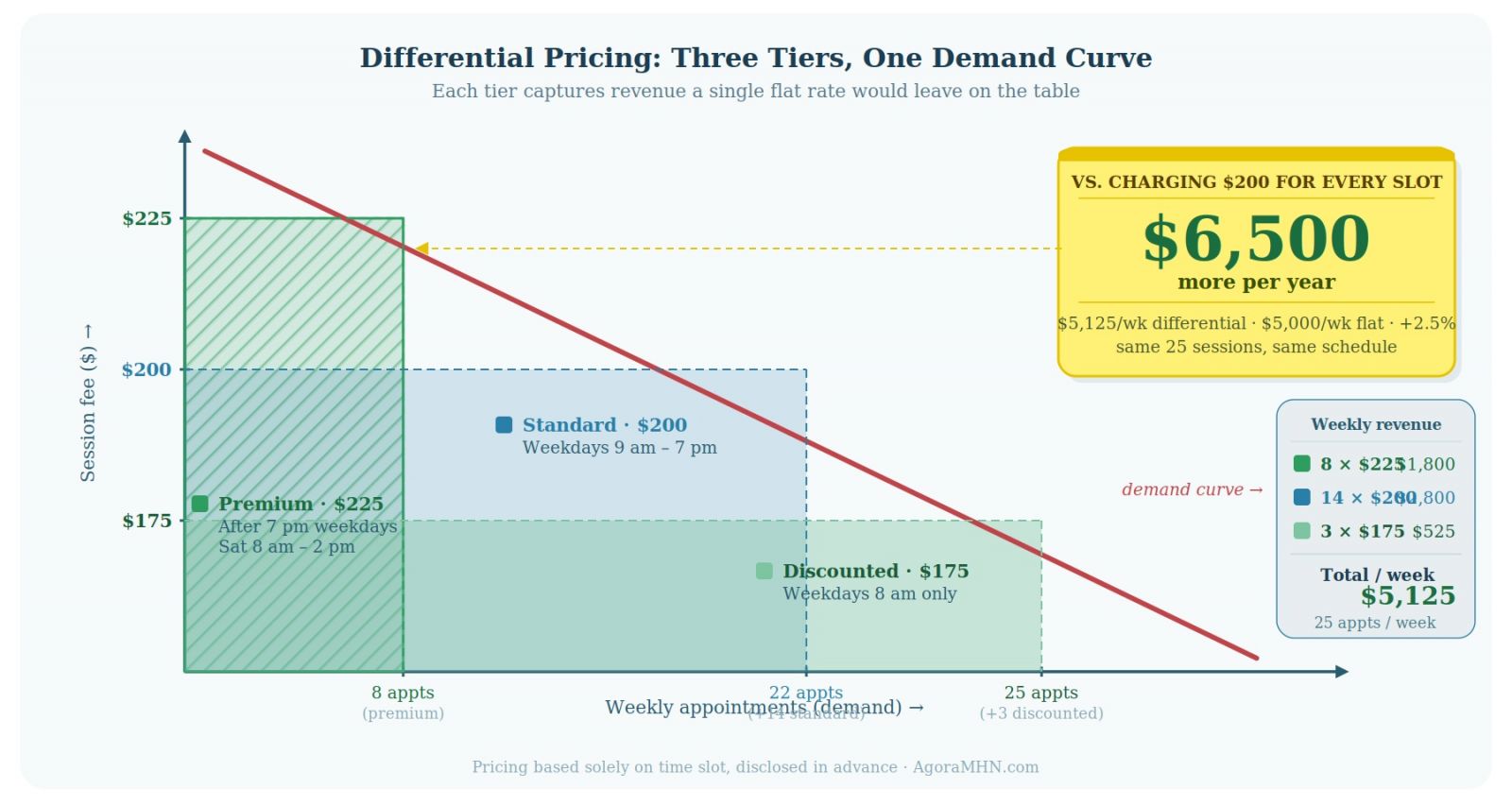
The figure below depicts the effect of differential pricing on total revenue versus the static pricing model. In this example, a therapist with 25 weekly appointments could boost revenue significantly, without working even one more hour!
Why This Matters Now
Mental health care is increasingly self-pay. As more patients opt out of insurance, or go out of network, and as telehealth expands the geographic reach of private practice, the business model of therapy is quietly changing. This isn't about extracting maximum dollars from vulnerable people. Differential pricing is one tool that lets therapists adapt: filling underutilized hours, rewarding patients who commit to ongoing care, and fairly compensating clinicians for the convenience that they provide by delivering care at inconvenient hours.
The Bottom Line
Therapists who set their own fees have more flexibility than they may realize — and more permission than they give themselves. Differential pricing is transparent, time-based, and entirely compatible with the ethical standards our profession holds dear. Filling that Tuesday morning slot, rewarding a committed patient with a bundled rate, charging fairly for a Saturday session: none of this diminishes the relationship. It sustains the practice that makes the relationship possible. A thriving clinician is a better clinician. When the practice is healthy, so is the care it delivers.
Posted by: Admin
Recent Comments
No records found.